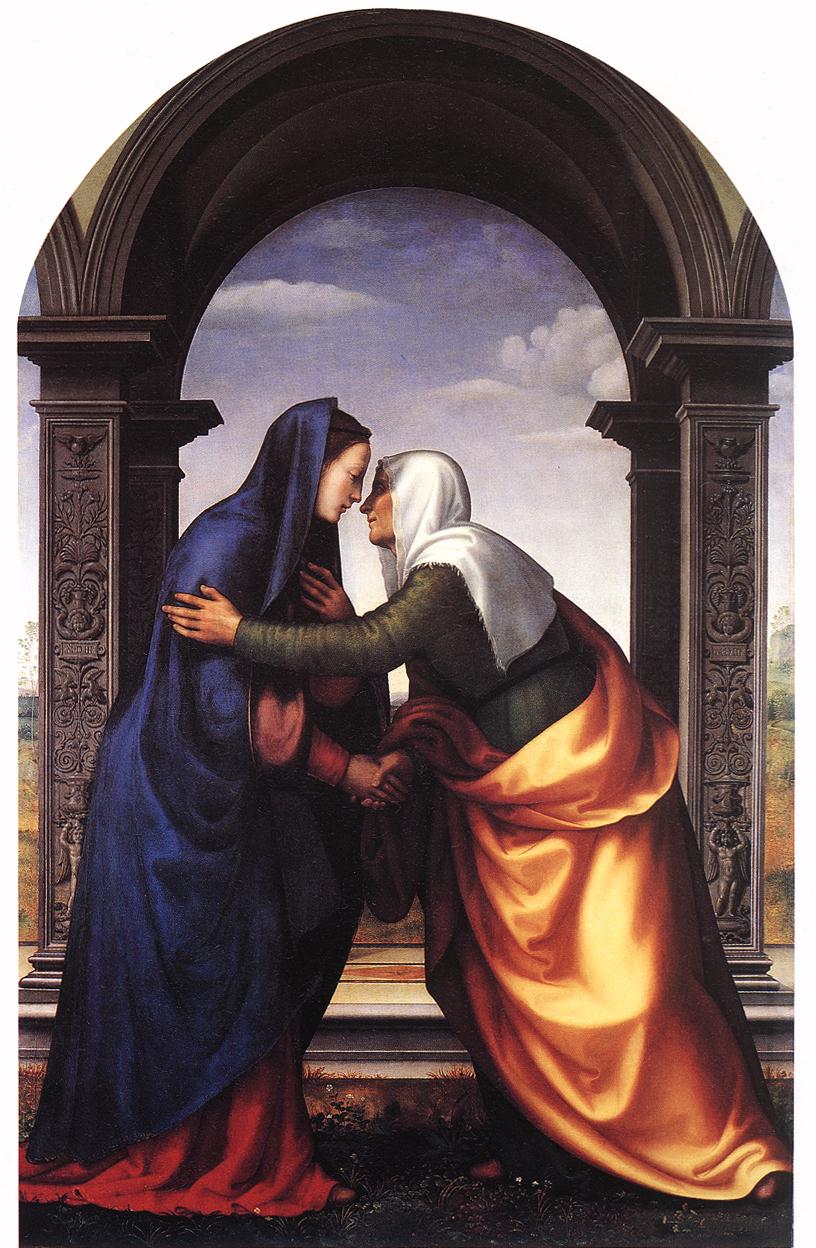
Sara’s death and burial in the field bought of Ephron.
The just man is humble and fair in his dealings.
“Notice, however, how the good man instructs even those people with his characteristic common sense, through his very actions, by forbearing to take possession of it before paying a just price. ‘Even if you for your part … have proved so kindly disposed toward me, I still cannot bring myself to take the tomb from you unless first I pay the proper price.’ He gave them money, the text says, took possession of the tomb ‘and buried his wife Sarah in the double cave of the field overlooking Mamre.’ The man who was so famous and respected, who enjoyed such confidence with God and was the object of such attention from everyone, so to say, in that place that even the Hittites called him king—he owned not even one foot of land. Hence blessed Paul also celebrated this good man’s virtue in writing these words: ‘By faith Abraham dwelt in the land of promise, like a foreigner living in tents with Isaac and Jacob, coheirs of the same promise.’ Then to teach us how it was through faith that he dwelt there, he added, ‘He looked forward, you see, to the city built on foundations of which the builder and creator was God.’ In the hope of things to come, he is saying, he overlooked present realities, and, in the expectation of greater things, he set less store by those of this life—and this before the law and the age of grace. So what excuse will we have, tell me, who despite such wonderful promises and guarantees of ineffable blessings hanker for present realities, buying up property, ever concerned for our image, amassing all these possessions out of greed and avarice and fulfilling in practice what the blessed prophet said in his lament, ‘Woe to those who pile house on house and add property to property for the purpose of robbing their neighbor of something.’ Do we not see this happening each day—widows being robbed, orphans despoiled and the weak oppressed by the strong? This good man, on the contrary, did not behave in that fashion; instead, he insisted on buying the tomb, and, when he saw those from whom he sought it ready and willing to hand it over, he could not bring himself to accept it before he paid the right price.” (4) -St. John Chrysostom
For those who know Christ and die in Christ have the sure hope of eternal life, the Catechism of the Catholic Church states:
1020 The Christian who unites his own death to that of Jesus views it as a step towards him and an entrance into everlasting life. When the Church for the last time speaks Christ’s words of pardon and absolution over the dying Christian, seals him for the last time with a strengthening anointing, and gives him Christ in viaticum as nourishment for the journey, she speaks with gentle assurance:
Go forth, Christian soul, from this world
in the name of God the almighty Father,
who created you,
in the name of Jesus Christ, the Son of the living God,
who suffered for you,
in the name of the Holy Spirit,
who was poured out upon you.
Go forth, faithful Christian!
May you live in peace this day,
may your home be with God in Zion,
with Mary, the virgin Mother of God,
with Joseph, and all the angels and saints. . . .
May you return to [your Creator]
who formed you from the dust of the earth.
May holy Mary, the angels, and all the saints
come to meet you as you go forth from this life. . . .
May you see your Redeemer face to face.
(OCF, Prayer of Commendation)
Happiness consists in a likeness to God and a nature free from passions obtains truth.
“The subjects by a free decision obey the good man in their enthusiasm for virtue. The philosopher Plato puts forward happiness as the goal of life and says it consists in ‘the greatest possible likeness to God.’ This may come from his going along with the general principles of the law (Philo the Pythagorean says in expounding the text of Moses, ‘Great natures free from passion aim fairly successfully in the direction of truth’).” (4) -St. Clement
Take heed to store up your treasures in Heaven and not be weighed down with those upon Earth. For where your treasure is, there your heart will be. (Matthew 6:21)
“With this in mind, dearly beloved, let us who live in the age of grace imitate the man who lived before the law, not burn with desire for more and heap up for ourselves to a greater and more intense degree the fire that cannot be extinguished and the flame that is intolerable. We will hear, in fact, if we persist in such awful deeds of injustice and avarice, the words spoken to that notorious rich man, ‘Fool, this night they are looking for your soul from you; but as for what you have put aside, whom will it belong to?’ I mean, what is the reason, dearly beloved, that you are anxious to amass so many things that you will shortly leave here, due as you are to be snatched away from the scene, not only powerless to gain any advantage from them but even saddled with the burden of sins on your own shoulders, at this stage too late for worthwhile repentance? While the goods you have amassed with avarice oftentimes finish even in the hands of enemies, you yourself will be required to give an account of them. So what folly would it be to labor for others’ benefit and pay the price for them yourself?” (4)(Homilies on Genesis) -St. John Chrysostom
Discussion: In what ways can we store up treasures in Heaven?
“Our Lady…told us she would come and take Francisco to heaven, and she asked me if I still wanted to convert more sinners. I said I did.”
-St. Jacinta Marto
 Women's Prayer Group In Christ