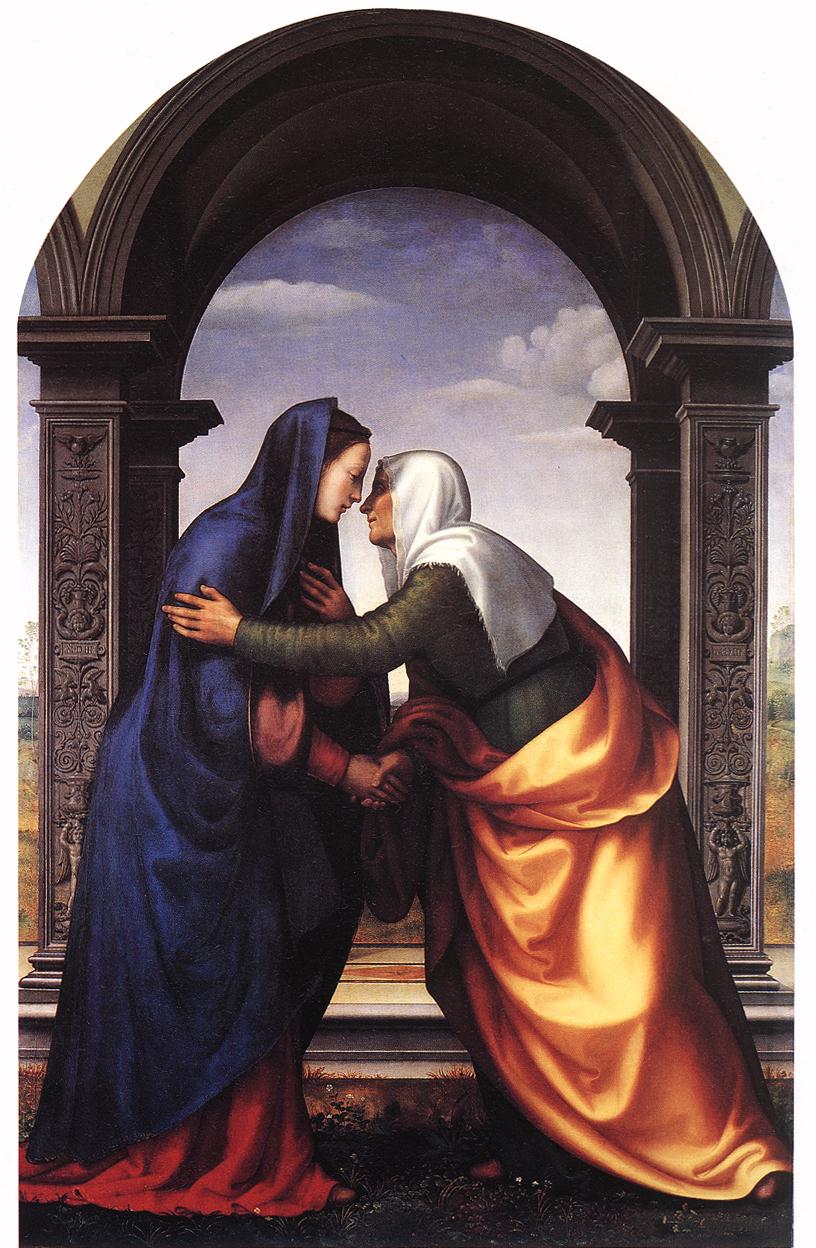
Confitemini Domino. God is to be praised for his wonderful works.
God’s mercy is everlasting.
“’Give thanks unto the Lord, for He is good, for His mercy endureth for ever’ (ver. 1). This Psalm contains the praise of God, and all its verses finish in the same way. Wherefore although many things are related here in praise of God, yet His mercy is most commended; for without this plain commendation, he, whom the Holy Spirit used to utter this Psalm, would have no verse be ended. Although after the judgment, by which at the end of the world the quick and the dead must be judged, the just being sent into life eternal, the unjust into everlasting fire, there will not afterwards be those, whom God will have mercy on, yet rightly may His future mercy be understood to be for ever, which He bestows on His saints and faithful ones, not because they will be miserable for ever, and therefore will need His mercy for ever, but because that very blessedness, which He mercifully bestows on the miserable, that they cease to be miserable, and begin to be happy, will have no end, and therefore ‘His mercy is for ever.’ For that we shall be just from being unjust, whole from being unsound, alive from being dead, immortal from being mortal, happy from being wretched, is of His mercy. But this that we shall be, will be for ever, and therefore ‘His mercy is for ever.’ Wherefore, ‘give thanks to the Lord;’ that is, praise the Lord by giving thanks, ‘for He is good:’ nor is it any temporal good you will gain from this confession, for, ‘His mercy endureth for ever;’ that is, the benefit which He bestows mercifully upon you, is for ever.(4) -St. Augustine
In private revelations recorded in St. Faustino’s diary, Jesus had spoken to her words such as these (entries 1074, 699, 1485, 1578):
I am love and mercy itself. … Let no soul fear to draw near to Me, even though its sins be as scarlet. … My mercy is greater than your sins, and those of the entire world. … I let My Sacred Heart be pierced with a lance, thus opening wide the source of mercy for you. Come then with trust to draw graces from this fountain. … The graces of My mercy are drawn by the means of one vessel only, and that is trust. The more a soul trusts, the more it will receive.
The incarnation of Christ allowed us to become partakers in the nature of God’s divinity.
“Then follows, ‘Give thanks to the God of gods, for His mercy endureth for ever’ (ver. 2). ‘Give thanks to the Lord of lords, for His mercy endureth for ever’ (ver. 3). We may well enquire, Who are these gods and lords, of whom He who is the true God is God and Lord? And we find written in another Psalm, that even men are called gods. The Lord even takes note of this testimony in the Gospel, saying, ‘Is it not written in your Law, I have said, Ye are gods?’ …It is not therefore because they are all good, but because ‘the word of God came to them,’ that they were called gods. For were it because they are all good, He would not thus distinguish between them.”(4) -St. Augustine
The Catechism of the Catholic Church states:
The Word became flesh to make us “partakers of the divine nature”: [2 Pt 1:4] “For this is why the Word became man, and the Son of God became the Son of man: so that man, by entering into communion with the Word and thus receiving divine sonship, might become a son of God.” [St. Irenaeus, Adv. haeres. 3, 19, 1: PG 7/1, 939] “For the Son of God became man so that we might become God.” [St. Athanasius, De inc. 54, 3: PG 25, 192B] “The only-begotten Son of God, wanting to make us sharers in his divinity, assumed our nature, so that he, made man, might make men gods.” [St. Thomas Aquinas, Opusc. 57, 1-4] [1265, 1391, 1988] (CCC 460).
God created all things in his manifested wisdom; He works wonders alone and other times, through angels and men.
“But what meaneth, ‘who alone doeth great wonders’? Is it because many wonderful things He hath done by means of angels and men? Some wonderful things there are which God doeth alone, and these he enumerates, saying, ‘who by His wisdom made the heavens’ (ver. 5), ‘who stretched out the earth above the waters’ (ver. 6), ‘who alone made great lights’ (ver. 7). For this reason did he add ‘alone’ in this verse also, because the other wonders which he is about to tell of, God did by means of man. For having said, ‘who alone made great lights,’ he goes on to explain what these are, ‘the sun to rule the day’ (ver. 8), ‘the moon and stars to govern the night’ (ver. 9); then he begins to tell the wonders which He did by means of angels and men: ‘who smote Egypt with their first-born’ (ver. 10), and the rest. The whole creation then God manifestly made, not by means of any creature, but ‘alone;’ and of this creation he hath mentioned certain more eminent parts, that they might make us think on the whole; the heavens we can understand, and the earth we see. And as there are visible heavens too, by mentioning the lights in them, he has bid us look on the whole body of the heavens as made by Him. However, whether by what he saith, ‘who made the heavens in understanding,’ or, as others have rendered it, ‘in intelligence,’ he meant to signify, the heavens we can understand, or that He in His understanding or intelligence, that is, in His wisdom made the heavens (as it is elsewhere written, ‘in wisdom hast Thou made them all’), implying thereby the only-begotten Word, may be a question. But if it be so, that we are to understand that ‘God by His wisdom made the heavens,’ why saith He this only of the heavens, whereas God made all things by the same wisdom? It is that it needed only to be expressed there, so that in the rest it might be understood without being written. How then could it be ‘alone,’ if ‘in understanding’ or ‘in intelligence’ means ‘by His wisdom,’ that is, by the only-begotten Word? Is it that, inasmuch as the Trinity is not three Gods, but one God, he states that God made these things alone, because He made not creation by means of any creature.(4) -St. Augustine
Hildegard of Bingen (1098-1179), Benedictine Abbess, mystic, and Doctor of the Church writes:
“Holy persons draw to themselves all that is earthly. The earth is at the same time mother of all that is natural, mother of all that is human. She is the mother of all, for contained in her are the seeds of all.
Glance at the sun. See the moon and the stars. Gaze at the beauty of earth’s greenings. Now, think. What delight God gives to humankind with all these things. All nature is at the disposal of humankind. We are to work with it. For without nature we cannot survive. Good People, most royal greening verdancy, rooted in the sun, you shine with radiant light.
‘With my mouth,’ God says, ‘I kiss my own chosen creation. I uniquely, lovingly embrace every image I have made out of the earth’s clay. With a fiery spirit I transform it into a body to serve all the world.’
Humankind, full of all creative possibilities, is God’s work. Humankind alone is called to assist God. Humankind is called to co-create. With nature’s help, humankind can set into creation all that is necessary and life-sustaining.”
 Women's Prayer Group In Christ